
About
Why Reprocover5.0 exists
Composite materials deliver exceptional strength, durability, and design freedom and they are increasingly used in infrastructure, mobility, and construction. Yet at the end of their service life, most composites are still landfilled or incinerated, wasting valuable resources and locking the industry into a linear model.
Reprocover5.0 exists to end that paradox by making composite materials truly circular without compromising performance through an industrial, low‑carbon, and scalable approach that can be deployed across Europe.
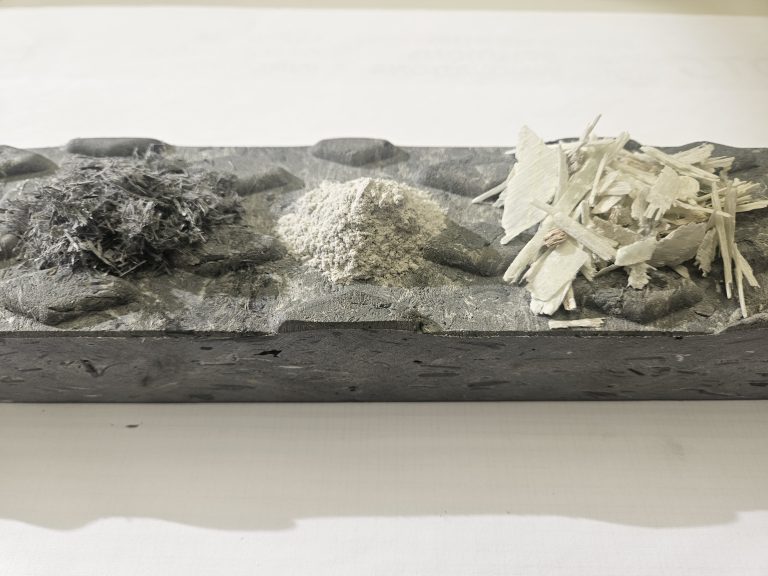
Our vision
Our mission
To lead composites into a robust and circular future.
We preserve the performance of composites while making them circular.
By transforming waste into durable, lightweight, high‑performance solutions, we:
- enhance construction efficiency and infrastructure safety
- reduce reliance on virgin raw materials
- enable the composite industry to reintegrate its own waste into new applications
- create social impact through employment, training, and reintegration opportunities enabled by automation adn advanced process control.
A Proven Step‑by‑Step Path to Industrial Maturity (1.0 → 5.0)
Reprocover5.0 is not a lab concept. It is the result of a progressive industrial maturation, where each generation validated a critical milestone:
- Reprocover1.0 — Feasibility proven (composites without fibers)
Demonstrated that composite recycling is technically feasible on relevant materials and validated the core process principles. - Reprocover2.0 — Feasibility proven (fiber‑reinforced composites)
Confirmed the ability to process fiber‑reinforced composite waste, enabling broader and more complex waste streams. - Reprocover3.0 — Economic feasibility (lower cost)
Optimized the process to reduce costs and improve competitiveness versus traditional materials and disposal routes. - Reprocover4.0 — Semi‑automated operation
Validated semi‑automated industrial production, improving throughput, consistency, and repeatability. - Reprocover5.0 — Fully automated, scalable, and network‑ready. Full industrial maturity: fully automated, scalable, capable of collaborating with any composite waste producer and end‑user, and designed to be duplicated to build a European network of local recycling hubs.
How Reprocover5.0 achieves this
Reprocover5.0 deploys robust, scalable, and local thermoset recycling hubs to launch the first industrial‑scale composite recycling lines supporting a circular and low‑carbon industry.
Robust
One production line can handle many product shapes and multiple material sources, even with a certain level of contamination. This robustness enables rapid adaptation to different markets while maintaining price competitiveness and guaranteeing consistent mechanical strength for demanding infrastructure applications.
Scalable & Local
Composite recycling operates at a much smaller scale than thermoplastics: thermoplastic recycling typically requires ≥ 50,000 tons/year, while Reprocover’s process is viable from < 4,000 tons/year.
Composites are also lightweight, making long‑distance transport (often beyond ~500 km) economically inefficient—strongly favoring local, decentralized production close to waste sources and markets.
Circular
Reprocover products are designed to be recycled again by Reprocover at end of life, ensuring true multi‑cycle circularity. In parallel, we collaborate with sorting lines to separate and remove composites with density > 1.08, enabling efficient reintegration into the recycling process.
Low-Carbon Industry
Our decisions are guided by Life Cycle Assessment (LCA), systematically evaluating technical and material options to minimize carbon impact. Although LCA is still rarely required in tenders, Reprocover has already demonstrated measurable decarbonisation impact at European level under Innovation Fund 2025 – Net‑Zero Technologies.
Reprocover5.0 : Industrial Circularity at Scale
Reprocover5.0 deploys a next‑generation industrial facility designed to make composite materials even more circular. By combining advanced recycling and manufacturing technologies, the project transforms thermoset and thermoplastic waste today largely landfilled or incinerated into high‑value, recyclable products for infrastructure, construction, and the polymer industry.
At the core of Reprocover5.0 is a fully integrated, automated process that converts complex composite waste directly into finished products and calibrated additives. The facility produces:
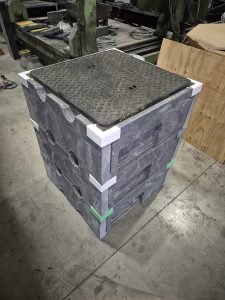
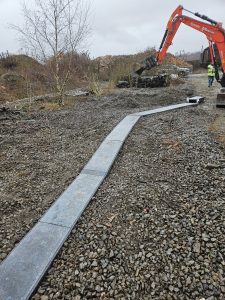
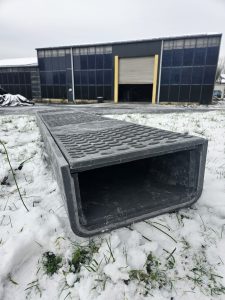
- Reprocessed ThermoComposite (RTC) components for rail, road, and building infrastructure
- Repro Calibrated Fibers (RCF) and Repro Calibrated Additives (RCA) for high‑performance polymer applications
All outputs are designed for recyclability at end of life, enabling true multi‑cycle circularity.
The innovation goes beyond the state of the art by enabling at industrial scale a fully circular, efficient, and sustainable solution for thermoset waste, integrating:
- crushing and sieving
- extrusion mixing and melting
- press molding
- smart process control
- a proprietary extrusion technique that enables consistent mixing of thermoset and thermoplastic waste
Reprocover5.0 delivers a replicable, modular factory model centralizing all production stages in a single site simplifying deployment across Europe and enabling rapid adaptation to market needs.
Impact
Starting operations in mid‑2029, Reprocover 5.0 will actively support the EU Green Deal, the Circular Economy Action Plan, and national low‑carbon strategies. Over ten years, the project is expected to:
- prevent 29.8 kt of plastic waste from landfilling or incineration
- avoid approximately 132,559 tCO₂‑eq emissions significantly reduce dependence on virgin raw materials across infrastructure and polymer applications.
Our commitment
Our values
We do not merely recycle composites.
We give the new lives, cycle after cycle with purpose.
Simplicity. Robustness.
Circularity. Transparency.
Research objectives & challenges
The Reprocover5.0 project aims to develop and deploy a fully automated composite recycling line with advanced process control, capable of operating reliably at industrial scale while remaining flexible and resource‑efficient.
The key research objectives are to:
• Achieve full automation of the recycling and manufacturing line, ensuring consistent quality, repeatability and reduced operational costs
• Integrate advanced process monitoring and control, enabling stable production despite more and more heterogeneous and contaminated waste inputs
• Increase market volume and address higher‑value applications, while maintaining economic viability at relatively low annual throughput
• Enable social impact, by combining automation with meaningful employment, training, and reintegration opportunities within a modern industrial environment
Research & Industrial challenges
The development of Reprocover5.0 addresses several critical challenges:
- No ready‑to‑use industrial solution exists
There is currently no turnkey production line capable of delivering fully circular recycling of thermoset composites. Reprocover must therefore design a unique process chain, selecting and adapting best‑in‑class technologies from different industries (recycling, food instries, composites, and lots more).
- System integration across multiple technologies
The challenge lies not in individual process steps, but in their seamless integration—from crushing and extrusion to molding and smart control into a single, robust, automated industrial line.
- Working with local, responsible, and innovative partners
The project relies on close collaboration with local industrial partners who must be both technically reliable and creatively engaged, while meeting strict delivery, quality, and safety expectations.
- Compliance with increasingly strict standards
As Reprocover targets higher‑performance and more demanding infrastructure applications, the process and products must comply with ever‑stricter technical and regulatory norms, without compromising cost competitiveness.
- Balancing performance with minimum viable volumes
Composite recycling operates at much smaller volumes than traditional thermoplastic recycling. A key challenge is to achieve high mechanical performance and certification‑ready quality while remaining viable at limited annual volumes.
Methods & Approaches
Reprocover’s technological development follows a progressive, risk‑controlled methodology, moving step by step from demonstrator‑scale validation to full industrial deployment.
Demonstrator Validation (Reprocover2.0 & 3.0)
Industrial Pre-Scaling (Reprocover 4.0)
Reprocover4.0 represents the critical transition toward industrial scale. This phase focuses on:
- increased automation of key process steps,
- validation of selected technologies at higher production speeds (up to 10 kg/min),
- stabilization of product quality and process repeatability under industrial conditions.
Reprocover 4.0 acts as the final technical validation layer, confirming the readiness of the technology and process architecture before committing to full automation.
Full Industrial Deployment (Reprocover5.0)
Based on the results of Reprocover4.0, Reprocover5.0 deploys a fully automated, integrated and scalable industrial line.
The final step consolidates all validated technologies into a single automated process, advanced process monitoring and control, the foundation for duplication of the line and the creation of a European network of composite recycling hubs.
This staged approach ensures technical robustness, industrial reliability and economic viability, while minimizing development risks and accelerating market deployment.
CONTACT

Florence BOUHY – Back officer officer
Sara EL MARZOUKI – Process and Production manger
Alexandre ORBAN – Production manager
Charles GÖBBELS – Managing director
Funded by the European Union. Views and opinions expressed are however those of the author(s) only and do not necessarily reflect those of the European Union or the European Climate, Infrastructure and Environment Executive Agency (CINEA). Neither the European Union nor the granting authority can be held responsible for them.